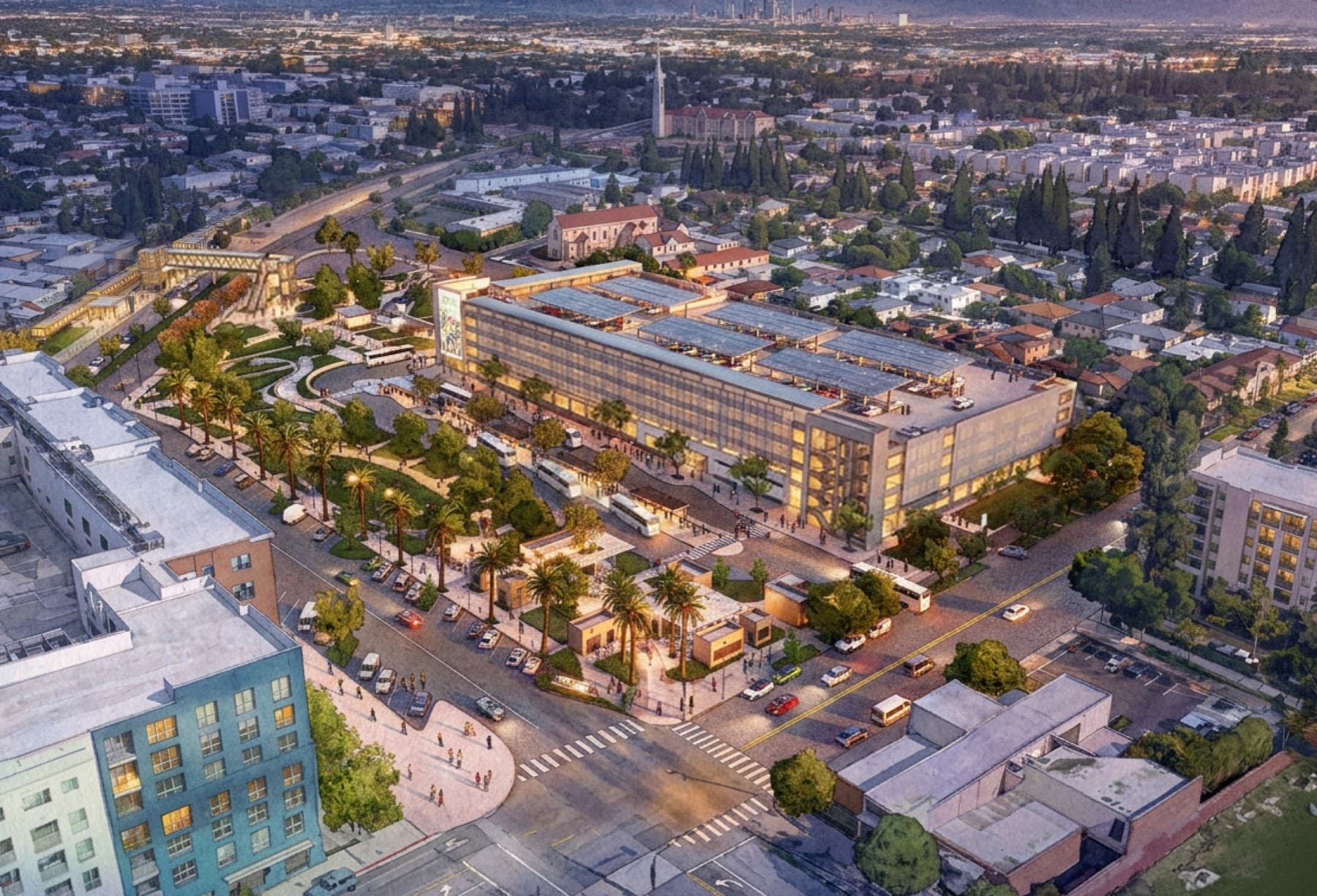

The Inglewood Transit Connector (ITC) is a transformative mobility program designed to improve connectivity, reduce congestion, and support economic growth throughout the City of Inglewood.
The current Phase 1 program includes mobility hubs, dedicated event-day transit services, streetscape upgrades, parking and electric vehicle facilities, pedestrian and bicycle infrastructure, and enhanced connections to regional transit.
The project will improve access between downtown Inglewood and the City’s sports and entertainment district including SoFi Stadium, Intuit Dome, Kia Forum and YouTube Theater while delivering everyday benefits for residents and businesses. The program is intended to support the region ahead of the LA28 Olympic and Paralympic Games and create a more connected, accessible and resilient transportation network.
Project facts
Location
Inglewood, California, USA
Client
City of Inglewood
Value
US$261 million
Consortium
Elevate Inglewood Development Company
Plenary Americas' role
Lead developer
Equity investor
Lead member of P3 consortium
Partners
Design-Builder: Swinerton
Architect: Walter P. Moore
Financial close date
September 2026
Contract terms
Construction + 20 years, DBFOM
Project website

Sustainability features
The ITC promotes sustainable urban mobility by encouraging transit use, reducing dependence on single-occupancy vehicles, supporting active transportation, and improving connections to the Metro rail network.
Phase 1 incorporates pedestrian and bicycle improvements, mobility hubs, electric vehicle charging facilities, enhanced bus operations and transit-oriented infrastructure designed to reduce traffic congestion and improve air quality.
Design features
The project features three strategically located mobility hubs that integrate parking, transit services, rideshare access, bicycle facilities and pedestrian connections into convenient transportation gateways. Streetscape improvements along Market Street, Manchester Boulevard and Queen Street will include new landscaping, hardscaping, lighting, wayfinding elements, street furniture and upgraded traffic controls.
Innovations
The ITC reflects an innovative, community-driven approach to transportation planning. Following extensive public engagement, the project was rephased to deliver meaningful mobility benefits before the 2028 Olympics while maintaining flexibility for future automated transit expansion. During the development of the current Phase 1 project, the consortium created various technology-neutral APM concept designs and developed a “preservation footprint” to ensure that the design of Phase 1 improvements reserves space for a future APM station.
Phase 1 was developed under a Development Agreement framework which allowed collaborative engagement between Plenary Americas and the City. Because of this, the team was able to accelerate design and procurement of a D&C Contractor. The consortium completed a 90% design and permitting for a shovel-ready project in nine months, making delivery of the project prior to the 2028 Olympics possible.
The public-private partnership structure also transfers key schedule and cost risks to the private sector, helping ensure efficient project delivery and long-term value for the City.
Local economic impacts
The ITC will strengthen Inglewood’s economic vitality by improving access to employment centers, entertainment destinations, local businesses and regional transit services. Investments in Market Street and Downtown Inglewood are expected to support commercial activity, enhance the visitor experience and encourage continued private investment.
Construction activities will generate employment opportunities, while improved transportation infrastructure will help businesses better serve residents and visitors during major events and everyday operations.
During operations, Plenary Americas will hire local residents for at least 35% of labor hours, with a priority for residents in the City of Inglewood and within a 10-mile radius from City Hall. The hiring process will also include a goal to hire individuals who face at least one barrier to employment such as being a single parent, someone who has been emancipated from the foster care system or who are veterans.
LSBE requirements/plans
The project has been developed through a procurement process emphasizing community participation, local business engagement and economic inclusion.
Construction will facilitate small and local business (SLBE) participation with a goal of 20% SLBE participation. Hiring and subcontracting will prioritize individuals and companies in the local Inglewood community.
Community benefits
Community input has been central to shaping the ITC program. Through workshops, public meetings and stakeholder engagement, residents identified priorities including traffic relief, improved transit access, safer pedestrian connections and revitalization of downtown areas. The resulting plan delivers mobility improvements that benefit residents year-round, not only during major events.
Enhanced transit connections, safer walking environments, expanded transportation choices and investments in Market Street and Downtown Inglewood will improve quality of life while supporting local businesses and neighborhood vitality.
The project is designed to leave a lasting legacy of connectivity and accessibility that extends well beyond the 2028 Olympic and Paralympic Games.

Long Beach Civic Center Redevelopment
The Project includes the creation of a new City Hall, a new Main Library, a revitalized Lincoln Park, parking facilities,…

William H. Gray III 30th Street Station Redevelopment
A large-scale restoration and renovation project is now underway at the William H. Gray III 30th Street Station in Philadelphia.…
SFMTA Potrero Bus Yard Modernization Project
The San Francisco Municipal Transportation Authority (SFMTA) Potrero Bus Yard Modernization Project involves the construction, renovation, improvement, equipping and furnishing…
© Plenary 2026